
HVAC GuidesMaintenance
How Often Should You Change Your HVAC Filter?
Quick answer
Check your HVAC filter every month and replace it when it looks dirty or has reached the manufacturer’s recommended interval. For many homes, that means every one to three months. In Flagler County, long cooling seasons can shorten the interval because your system may run far more often than it would in a cooler climate.
Do not rely only on the number printed on the filter package. A home with pets, allergies, construction dust, frequent visitors, or a system that runs much of the day may need more frequent changes.
Why filters need more attention in Flagler County
Your HVAC filter catches dust and other particles before they reach the indoor equipment. As it loads up, it can restrict airflow and reduce comfort and equipment performance.
Flagler County’s long warm season matters here. From inland Korona to the homes along A1A, air conditioning often runs for extended stretches to handle both heat and humidity. More runtime means more air moving through the filter, which means it can become dirty sooner than the same filter would in a home that only cools for a few months each year.
A realistic filter-change schedule
There is no single correct interval for every home. Use these ranges as a starting point, then adjust based on what you see when you inspect the filter.
| Home situation | Good starting point |
|---|---|
| One-inch filter in an average home | Check monthly; often replace every 1 to 3 months |
| Home with pets, allergies, or a busy household | Check monthly; replacement may be needed every 1 to 2 months |
| Vacation home or lightly occupied home | Check monthly when the system is running regularly; it may last longer |
| Thicker media filter, such as a 4-inch or 5-inch model | Follow the equipment or filter manufacturer’s guidance and inspect it regularly |
The most useful habit is simple: put a recurring monthly reminder on your calendar. During each check, replace the filter if it is visibly loaded with dust, lint, pet hair, or debris, even if the date on the package says it should last longer.
What makes a filter get dirty faster?
Several things can shorten a filter’s life.
Heavy system runtime
The more your air conditioner or heat pump runs, the more air passes through the filter. Extended warm, humid weather in Flagler County is often enough to make a monthly check worthwhile even in homes without pets.
Pets and household activity
Dogs, cats, shedding, frequent guests, and ordinary household dust all add particles to the air. A home with several pets often needs more frequent filter changes than a quiet, lightly occupied home.
Allergies and indoor-air concerns
Homes that use a higher-efficiency filter to capture more airborne particles may need closer attention. A better filter can be helpful only if the HVAC system is designed to handle it and the filter is replaced before it becomes too restrictive.
Remodeling, cleaning, or nearby dust
Home projects, sanding, flooring work, and even a period of heavy pollen or outdoor dust can load a filter quickly. Check it more often during and after those conditions. If work is creating significant dust, protect the HVAC system according to the contractor’s plan rather than simply running it through the job.
How to tell when a filter should be changed
A filter does not have to look completely black before it needs attention. Replace it when you see a noticeable buildup of dust, lint, hair, or debris across the surface, or if airflow seems weaker than usual.
Other signs worth noticing include:
- More dust collecting around the house than usual
- Rooms that take longer to cool or heat
- A return grille that seems to pull less air
- A musty smell that persists after normal housekeeping
- A filter that is bent, damp, damaged, or no longer fits snugly
These signs do not always mean the filter is the only issue. They do mean it is a safe and sensible first item to inspect.
How to change the filter safely
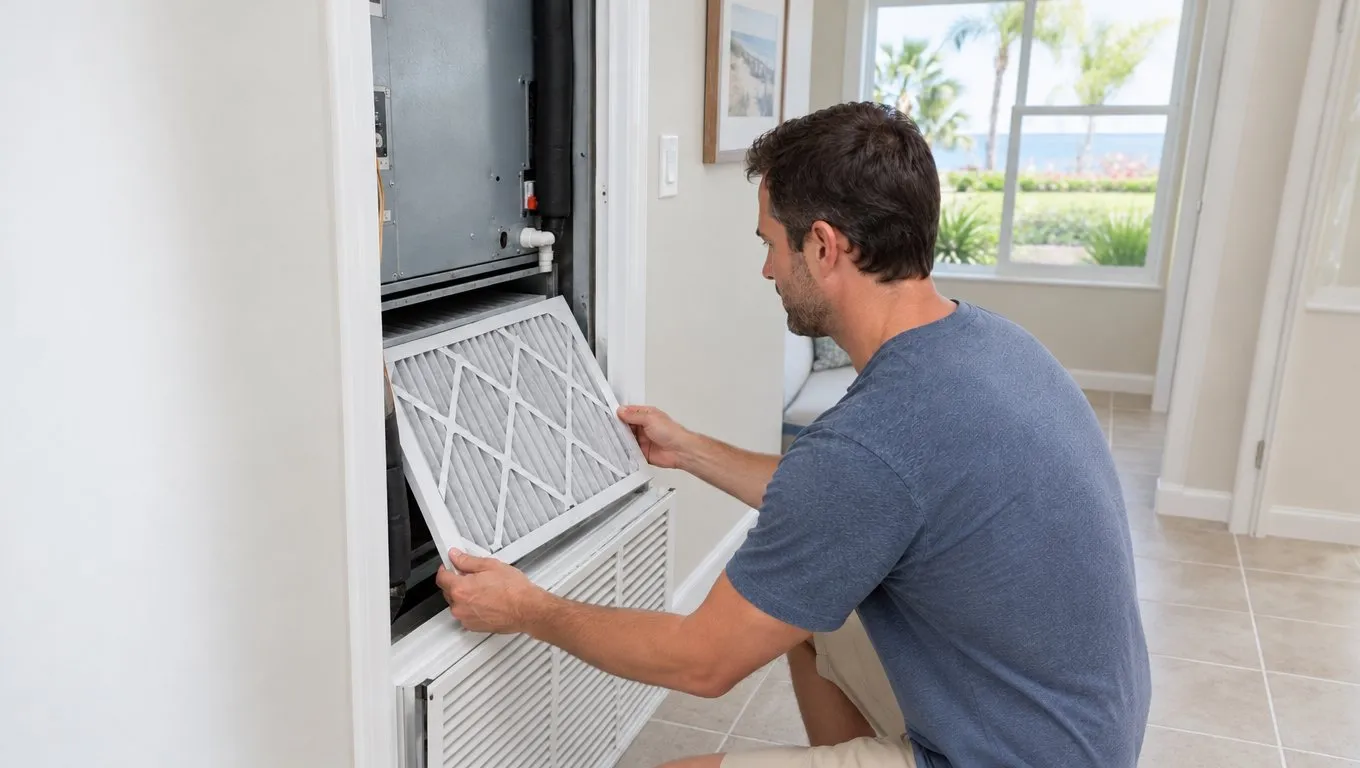
- Find the filter location. It may be behind a return-air grille, inside or near the air handler, or in a dedicated filter cabinet.
- Check the size printed on the filter frame before buying a replacement. The actual filter size may be slightly different from the nominal size printed on packaging, so match the existing filter or the equipment label.
- Turn off the system at the thermostat before removing the filter.
- Install the new filter with the airflow arrow pointing toward the air handler or into the return duct. The arrow should point in the direction the air travels, not toward the room.
- Make sure the filter sits flat and the access panel or grille closes securely.
- Restore the thermostat and make a note of the change date.
Never run a central system without its filter in place. It helps protect the indoor equipment.
Choose the right filter, not just the highest rating
Filter ratings can be confusing. MERV is a common rating system that indicates how effectively a filter captures certain airborne particles. A higher rating generally captures smaller particles, but it can also create more resistance to airflow.
That does not mean every home should use the highest-rated filter available at the store. Your system needs enough airflow to operate properly. The best choice is the highest filter rating your particular equipment and filter slot can accommodate without creating an airflow problem.
If you are considering a significant jump in filter efficiency because of allergies, pets, or indoor-air concerns, check your owner’s information or ask an HVAC professional. A properly matched filter is better than an overly restrictive one.
Common filter mistakes to avoid
Installing the filter backward
The airflow arrow matters. A backward filter can fit in the slot but may not perform as intended. When in doubt, remember that air flows from the return grille toward the indoor air handler.
Assuming a higher MERV rating is always better
A high-efficiency filter can be a good option when the system supports it. It is not automatically the best choice for every older or tightly sized system. Match the filter to the equipment instead of choosing based on the largest number on the shelf.
When a dirty filter is not the whole problem
Replace the filter first if it is dirty, then give the system time to return to normal. Call a qualified HVAC professional if you still have weak airflow, frequent shutoffs, ice on the equipment, unusual noises, water around the air handler, or rooms that remain uncomfortable.
Homeowners close to the beach may also have other outdoor-equipment maintenance needs related to coastal exposure, but a filter change is still a good first step for an airflow concern inside the home.
Frequently asked questions
Can I wait until the filter looks very dirty?
It is better to check it monthly than to wait until it is heavily loaded. A filter may be restrictive before it looks extreme, especially after a period of heavy AC use.
Should I change my filter more often if I have pets?
Usually, yes. Pet hair and dander can load a filter more quickly. Start with a monthly inspection and let the actual condition of the filter guide your schedule.
Is a washable filter better than a disposable one?
Neither is automatically better. A washable filter must be cleaned thoroughly and allowed to dry completely before it goes back in the system. A disposable filter is convenient, but it must be the correct size and rating. Follow your equipment manufacturer’s guidance.
What if my filter is clean but the airflow is still weak?
A clean filter rules out one common cause, but it does not diagnose the system. Keep the vents and return grilles clear, then arrange a professional evaluation if the problem persists.
The bottom line
For most Flagler County homes, checking the filter once a month is the right routine. Replace it when it is dirty and no later than the interval recommended for your filter and system. A small, consistent maintenance habit can help protect airflow, comfort, and the HVAC equipment that works hard through our long cooling season.
Need professional help? Browse HVAC companies serving Flagler County.