
HVAC GuidesCost & Savings
Ways to Lower Your Cooling Costs in Flagler County
Quick answer
The most reliable ways to lower cooling costs are to use the highest thermostat setting that still feels comfortable, keep airflow moving freely, reduce sun and hot-air leaks, use ceiling fans only in occupied rooms, and keep the AC system maintained. In Flagler County, controlling humidity matters too. A home that feels clammy may tempt you to keep lowering the thermostat even when the temperature is already comfortable.
Start with the low-cost steps first. A dirty filter, blocked return grille, sun-baked windows, or an outdated thermostat schedule can waste energy without requiring a new air conditioner.
Why cooling costs are different in Flagler County
Air conditioning in Flagler County is not a short summer expense. Long warm seasons, high humidity, and strong sun can keep systems working for much of the year. A home in Palm Coast may run the AC heavily from spring through fall, while beachside homes from Flagler Beach to Beverly Beach can also contend with humidity and outdoor equipment exposure.
That does not mean high bills are unavoidable. It means the best results usually come from several small improvements working together: reducing heat gain, improving airflow, using the thermostat intentionally, and addressing problems before the system has to work around them.
Use the thermostat strategically
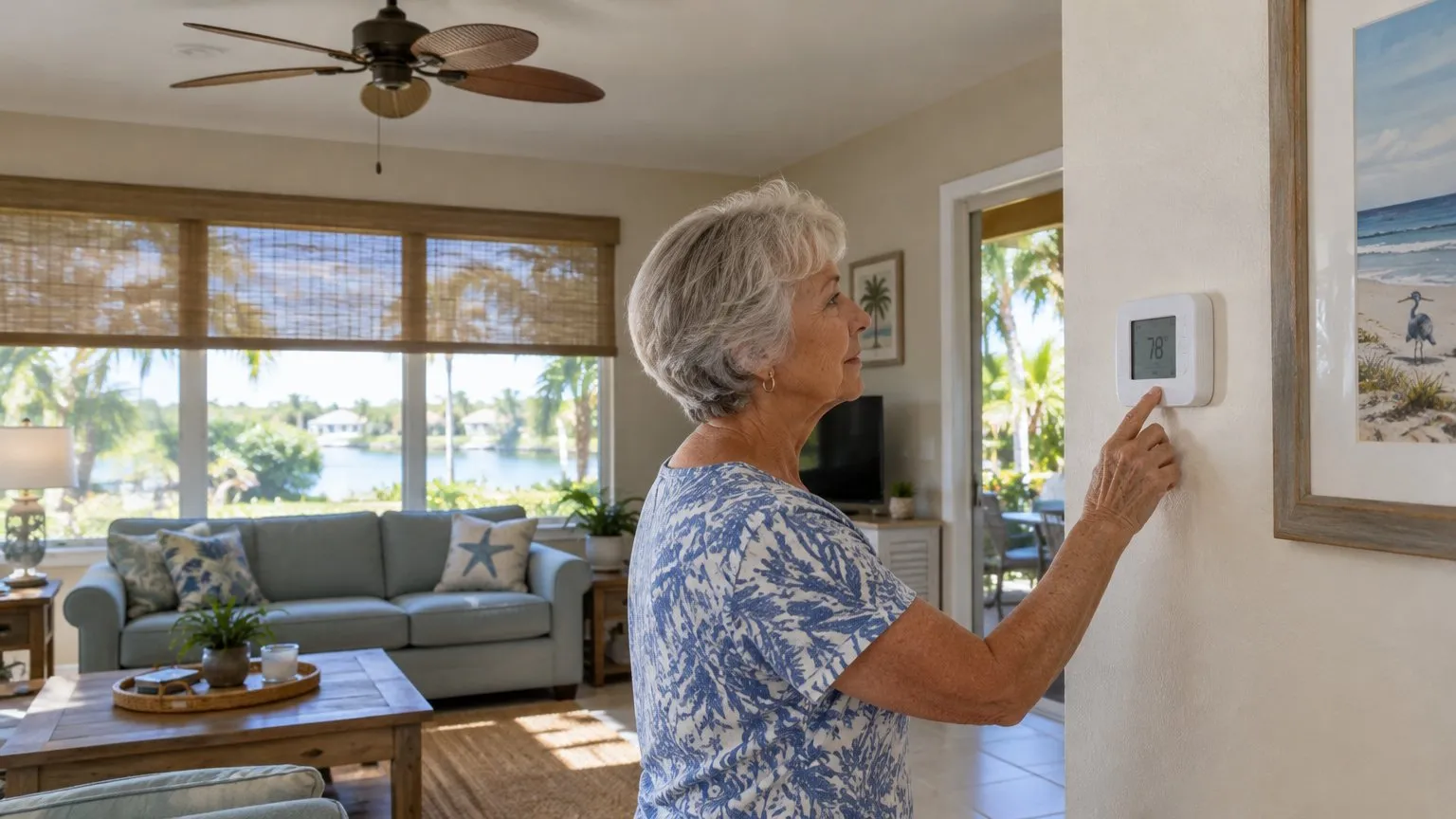
Set the thermostat as high as you can while remaining comfortable. The smaller the difference between the indoor and outdoor temperature, the less work your system generally has to do.
Many homeowners find that a setting in the upper 70s is comfortable when ceiling fans are running in occupied rooms. Your best setting will depend on the home, household preferences, humidity, activity level, and health needs. The important point is to avoid automatically lowering the thermostat every time the house feels warm.
A colder setting does not cool the house faster
Setting the thermostat dramatically lower does not make the AC cool faster. It simply tells the system to run longer and can make the home too cold before you notice. Make gradual changes and give the system time to respond.
Use schedules carefully
A programmable or smart thermostat can help when the home is empty for predictable periods. Raise the temperature modestly while everyone is away, then have it return to your normal comfort setting before people come home.
Do not use a schedule that lets the house become hot and humid all day if the system then struggles for hours to catch up. In Florida’s climate, a modest adjustment is often more practical than an extreme setback.
Make the home feel cooler without lowering the thermostat
Use ceiling fans in occupied rooms
Ceiling fans do not lower the room’s temperature, but the moving air can make people feel cooler. That may let you raise the thermostat a few degrees without giving up comfort. Set the fan to turn counterclockwise in cooling season, and turn it off when the room is empty because a fan only helps people, not the room itself.
Block direct sun before it heats the room
Strong afternoon sun can add substantial heat to rooms with large windows, especially on unshaded sides of the home. Close blinds or curtains during the hottest part of the day, use exterior shade where practical, and keep sun-blocking treatments clear of any safety requirements for windows or doors.
This can be especially noticeable in bright, open homes. The goal is not to darken the house all day. It is to stop direct sun from turning a comfortable room into the reason the thermostat keeps dropping.
Seal obvious air leaks
Warm, humid outdoor air entering through gaps around windows, exterior doors, and penetrations makes the AC work harder. Weatherstripping and caulk are often sensible homeowner projects when used in the right location. Replace worn door sweeps, close gaps around accessible window trim, and make sure doors close properly.
For larger leakage problems, attic work, or anything involving HVAC ducts, bring in a qualified professional rather than guessing at a fix.
Protect airflow and system performance
Check the filter monthly
A dirty filter slows airflow and can make the system run longer. Check it every month during heavy-use periods and replace it when it is dirty, following the equipment and filter manufacturer’s recommendations. A filter that is too restrictive for the system can also cause airflow problems, so do not assume the highest available rating is automatically the best choice.
Keep vents and return grilles clear
Furniture, rugs, drapes, and storage boxes can block supply vents and return grilles. Walk through the house and make sure air can enter and leave each room freely. Closing off many vents to force more air into another room can upset the system’s airflow and is rarely a good long-term strategy.
Give the outdoor unit room to breathe
Trim back vegetation and remove leaves, pine straw, and loose debris from around the outdoor unit. Do not pile supplies, patio furniture, or landscaping materials against it. In coastal parts of Flagler County, routine outdoor-unit checks are also a good time to spot visible corrosion or windblown debris before it turns into a larger maintenance concern.
Treat humidity as a comfort problem, not just a temperature problem
When indoor humidity is high, even a reasonably cool home can feel sticky. Many people respond by turning the thermostat lower, which can increase energy use without fully solving the moisture issue.
Start with the basics: keep exterior doors and windows closed while cooling, run bathroom exhaust fans only as long as needed, and make sure the AC filter and condensate system receive regular attention. If the home remains clammy, has musty odors, or shows recurring moisture concerns, ask an HVAC professional to evaluate the system’s airflow, drainage, sizing, and humidity control.
Avoid assuming that a bigger AC system will solve humidity. Equipment that is not properly matched to the home can create comfort problems of its own.
Do not skip maintenance
Annual professional service gives a technician a chance to check components that homeowners should not repair, including refrigerant performance, electrical connections, coils, drainage, and system controls. It is not a guarantee against every repair, but it can identify conditions that make cooling less efficient or less reliable.
Ask about your concerns rather than requesting a replacement by default. If bills have climbed, certain rooms are always hot, or the system runs constantly, the cause might be maintenance, airflow, ducts, insulation, or air leaks rather than the air conditioner itself.
When ductwork or insulation may be part of the problem
Some cooling-cost issues begin outside the equipment. Leaky, disconnected, poorly insulated, or crushed ductwork can waste conditioned air before it reaches the room. Attic ductwork deserves particular attention because it sits in a very hot space for much of the year.
Consider an HVAC or home-performance evaluation if you notice:
- One or more rooms are consistently warmer than the rest of the house.
- The system runs for long periods but comfort is uneven.
- Utility bills are high despite reasonable thermostat settings and a clean filter.
- You can see damaged, loose, or poorly supported accessible ducts.
- The attic insulation appears thin, displaced, or incomplete.
These are not always DIY projects. A proper assessment can prevent you from spending money on a new system before the home and ductwork problems are understood.
Think carefully before replacing equipment
An older system may cost more to operate, but age alone does not tell you whether replacement is the right next step. First address filters, maintenance, thermostat use, air leaks, shading, and duct issues. Then have a qualified contractor evaluate the equipment if it still struggles to cool, cannot control humidity, requires frequent repairs, or no longer delivers dependable comfort.
If replacement is appropriate, correct sizing and installation matter as much as the efficiency rating. A system should be selected for the house, not simply swapped based on the size of the old unit.
A practical cooling-cost checklist
| This week | This season |
|---|---|
| Raise the thermostat to the highest comfortable setting | Schedule routine HVAC maintenance if it is due |
| Check the filter, vents, and return grilles | Ask about ductwork, airflow, or humidity concerns |
| Run ceiling fans only in rooms being used | Inspect weatherstripping and window coverings |
| Clear loose debris around the outdoor unit | Review thermostat schedules before the hottest months |
When to call an HVAC professional
Call for service when the system runs almost constantly without reaching the set temperature, certain rooms remain hot after the simple checks, the house feels persistently humid, airflow is weak, or you see ice or water around the equipment. A professional can determine whether the issue is the air conditioner, ducts, drainage, electrical components, refrigerant, or something else affecting performance.
The bottom line
Lower cooling costs in Flagler County usually come from making the existing system’s job easier. Keep the filter and airflow in good shape, reduce heat and humidity entering the home, use the thermostat and fans intentionally, and investigate persistent comfort problems before assuming you need a new unit.
Still having trouble? Browse HVAC companies serving Flagler County to find local professionals who can help.