
HVAC GuidesSeasonal Tips
Preparing Your HVAC for Flagler County's First Cold Snap
Quick answer
Before the first genuinely cold night, switch your thermostat to heat and run the system for 10 to 15 minutes while you are home. Make sure warm air reaches the rooms, check or replace a dirty filter, clear leaves and debris away from the outdoor unit, and pay attention to anything unusual. A brief dusty smell can be normal the first time heat runs after a long break. No heat, weak airflow, repeated breaker trips, persistent burning smells, or heavy ice on a heat pump are reasons to call a professional.
Why this matters in Flagler County
In Flagler County, air conditioning does most of the work for much of the year. From Palm Coast to Flagler Beach, it is easy to go months without asking the system to heat the house at all. That makes the first cold snap a common time to discover a problem that has been sitting unnoticed since last winter.
The goal is not to prepare for a northern-style winter. It is simply to make sure the heat works before you need it overnight. This is especially helpful farther inland around Bunnell, where cold mornings can feel more pronounced than they do along the immediate coast.
Test the heat before you need it
Choose a mild day or early evening when you can stay home for the test.
- Set the thermostat mode to Heat. Do not leave it in Auto if you want to make sure the heating mode is actually working.
- Set the temperature a few degrees above the current indoor temperature.
- Give the system 10 to 15 minutes to run.
- Walk through the home and make sure the supply vents are delivering warm air and that the airflow feels reasonably consistent from room to room.
- If you have a heat pump, check that its outdoor unit is operating.
The air from a heat pump’s vents may not feel as hot as air from a gas furnace. It should still feel comfortably warm and steadily raise the indoor temperature. If the thermostat setting climbs but the house never warms up, or the air feels cool for an extended period, schedule service before the next cold night.
Start with the simple checks
Many first-cold-snap problems are not complicated, but it is best to keep homeowner checks limited to safe, routine items.
Check the thermostat
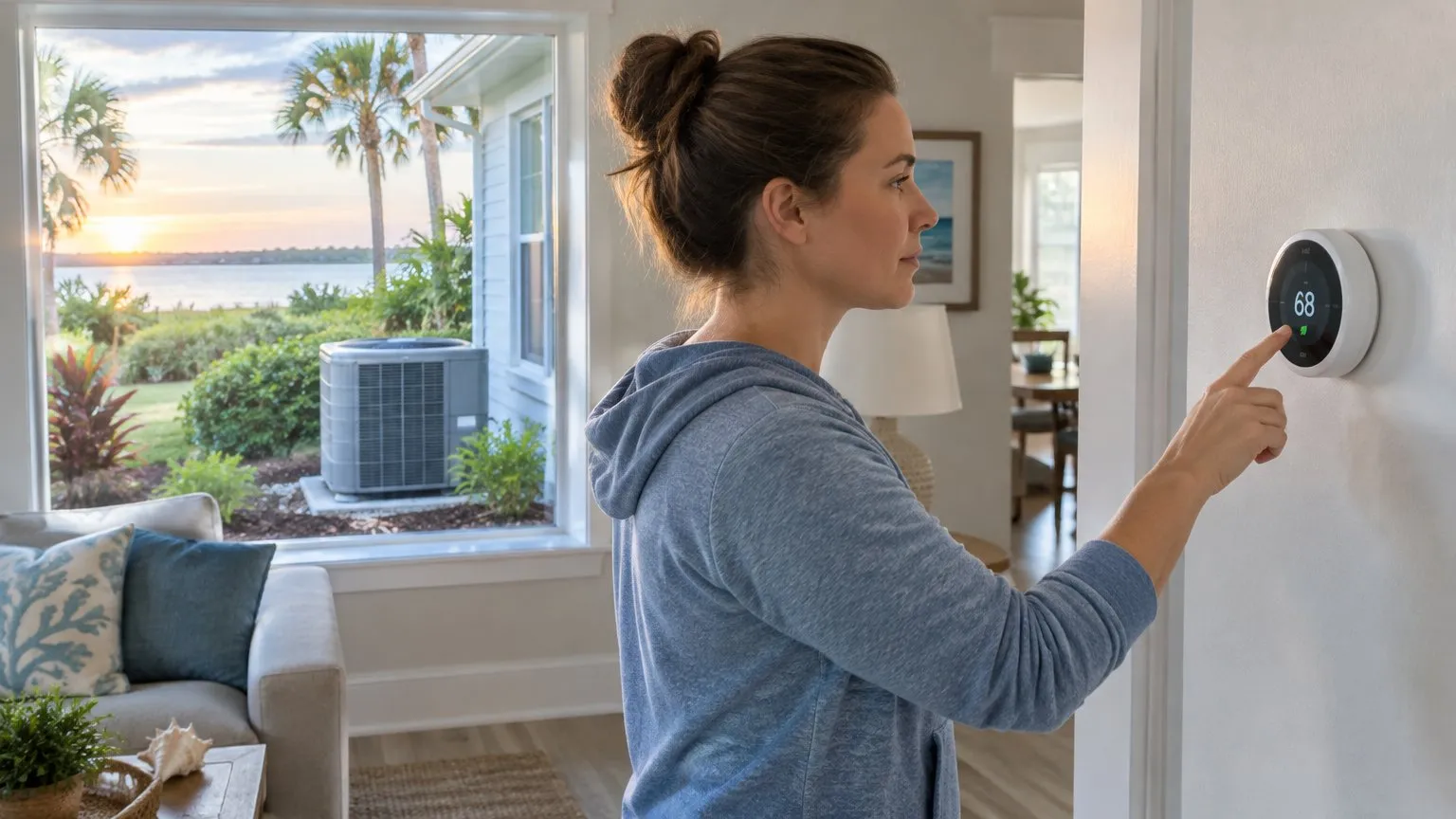
Confirm that the thermostat has power, is set to Heat, and is set above the current room temperature. Replace batteries if your thermostat uses them and the display is weak or blank. If the thermostat has a schedule, make sure an old cooling schedule is not immediately changing the setting back.
Check the filter and airflow
A clogged filter restricts airflow in both cooling and heating mode. Replace a disposable filter that looks dirty, or clean a reusable filter according to its instructions. Then make sure return grilles and supply vents are not blocked by furniture, rugs, or stored items.
Avoid running the system with no filter, and do not install a denser filter than your system can handle just because it sounds better. The correct filter is one that matches the equipment and your household needs.
Look at the outdoor unit from a safe distance
Turn your attention to the area around the outdoor unit, not its internal parts. Remove loose leaves, pine straw, branches, and other debris from around it. Keep shrubs and stored items from crowding the unit so air can move freely.
Do not cover a heat pump during winter operation. Unlike a cooling-only air conditioner, a heat pump needs to run outdoors when it is heating your home. In coastal homes, a routine visual check is also a good time to look for obvious corrosion or windblown debris around the cabinet.
Listen and smell once the system starts
A faint dusty or slightly burning smell can happen when heating components first run after a long period of inactivity. It should fade quickly. Stop the system and arrange service if you smell a strong electrical or burning-plastic odor, see smoke, hear loud grinding or banging, or notice the breaker tripping.
What heat-pump behavior is normal during a cold snap?
Heat pumps heat and cool by moving heat rather than creating it the way a traditional furnace does. During cool, damp weather, the outdoor coil can collect a light layer of frost. That is not automatically a problem.
Your system should periodically go through a defrost cycle to clear that frost. During defrost, you may hear a change in the outdoor unit, see water or steam around it, or briefly notice cooler air from the vents. The system should then return to normal heating.
Call a professional if the outdoor unit becomes heavily iced over, the ice remains after the system has had time to defrost, the unit repeatedly struggles to heat the house, or you see water pooling where it should not. Do not chip ice off the coil or pour hot water on the equipment.
Auxiliary heat is not the same as an emergency
Many heat pumps have auxiliary heat, often shown as AUX HEAT on the thermostat. It is a supplemental electric heat source that can assist when the outdoor temperature drops, when the system is catching up after a large thermostat change, or while the heat pump is defrosting.
Seeing auxiliary heat briefly during a Flagler County cold snap is not necessarily a concern. It can cost more to run than normal heat-pump operation, though, so a system that relies on it constantly deserves a closer look.
Emergency Heat is different. It generally bypasses the outdoor heat-pump operation and relies on backup heat. Use it only when a qualified technician has advised you to do so or when the heat pump is known to be out of service. If you are unsure which setting you need, leave the thermostat in regular Heat and call for guidance rather than experimenting with system modes.
Keep the thermostat steady
For most heat-pump homes, a comfortable, steady setting works better than large overnight setbacks followed by a big morning increase. Raising the thermostat several degrees at once may bring on auxiliary heat, which is less efficient.
Choose a setting that keeps your home comfortable, then make modest adjustments if needed. If certain rooms stay cold while others are warm, check that vents are open and unobstructed. Persistent uneven temperatures can point to an airflow, duct, thermostat, or equipment issue worth having evaluated.
When to call an HVAC professional
Schedule service before the next cold spell if you notice any of the following:
- The system will not switch into heating mode or does not produce warm air.
- Airflow is weak after you have checked the filter and vents.
- The thermostat is calling for heat, but the outdoor unit never runs on a heat-pump system.
- The outdoor unit is heavily iced or does not clear frost through a normal defrost cycle.
- Auxiliary heat seems to run all the time.
- The system makes loud new noises, trips a breaker, or produces a persistent burning or electrical smell.
- Your heat has worked poorly for more than a few minutes, even after the simple checks above.
A fall maintenance visit can also be worthwhile if the equipment has not been serviced recently. A technician can check heating performance, electrical connections, drainage, airflow, and the parts that homeowners should not try to repair themselves.
A five-minute first-cold-snap checklist
- Set the thermostat to Heat and test it before the forecast turns cold.
- Replace or clean the filter if needed.
- Make sure vents and return grilles are open and clear.
- Remove leaves and loose debris from around the outdoor unit.
- Expect a brief first-use dust smell, but not a persistent burning or electrical odor.
- Watch for normal heat-pump defrost behavior, not lasting ice buildup.
- Use regular Heat as your default setting. Do not switch to Emergency Heat unless advised.
Frequently asked questions
Why does my heat pump blow air that feels less hot than a furnace?
Heat pumps usually deliver gentler warmth than a furnace, but they can still heat the home effectively. The important question is whether the indoor temperature rises and the house becomes comfortable. If it does not, have the system checked.
Is frost on my outdoor heat pump normal?
A light coating of frost in cool, damp weather can be normal. The system should clear it during defrost. Thick or persistent ice is not something to ignore.
Should I cover my outdoor unit for winter?
No, not if it is a heat pump. It needs outdoor airflow to heat your home. Keep the area clear instead.
Why is my thermostat showing AUX HEAT?
Auxiliary heat may come on during colder weather, defrost, or a large temperature increase. It is normal to see it occasionally. If it remains on much of the time or your electric bill jumps unexpectedly, have the system evaluated.
The bottom line
Flagler County may have mild winters, but dependable heat still matters on the nights when temperatures drop. A quick test before the first cold snap gives you time to address a dirty filter, thermostat setting, airflow issue, or heat-pump problem without waiting for an uncomfortable surprise.
Still having trouble? Browse HVAC companies serving Flagler County to find local professionals who can help.