
HVAC GuidesSeasonal Tips
Preparing Your HVAC for Hurricane Season
Quick answer
Before hurricane season or an approaching storm, keep the outdoor unit clear, remove loose yard items, confirm that the system is maintained, and know how you will handle a power outage. Do not build a makeshift cover around a running unit or attempt electrical, refrigerant, or structural repairs yourself.
After a storm, inspect from a safe distance before restarting the system. If the unit was flooded, shifted, struck by debris, has damaged wiring, or sits in standing water, have it checked by a qualified HVAC professional.
Why storm preparation matters in Flagler County
Flagler County homes can face tropical storms, hurricanes, heavy rain, windblown debris, coastal conditions, and power outages. Your HVAC equipment is built to live outdoors, but that does not make it immune to floodwater, falling branches, loose objects, or electrical damage.
Preparation is mainly about reducing avoidable risks and knowing when to leave the equipment alone. The goal is not to turn the outdoor unit into a sealed box. It needs airflow to operate, and improper coverings or homemade restraints can create damage of their own.
Before hurricane season begins
Schedule maintenance if it is due
Routine professional service is a good time to ask about the system’s overall condition, drainage, electrical components, outdoor cabinet, and any visible corrosion. Homes near the ocean, from Flagler Beach north to Marineland, may warrant extra attention to the outdoor unit because salt-air exposure can add to normal wear.
Maintenance is not stormproofing, but a system that is already struggling with airflow, drainage, or electrical issues is more likely to be troublesome when severe weather arrives.
Check the outdoor area
Keep shrubs, loose branches, leaves, and stored items away from the unit. Make sure the equipment is accessible and that you can see if something has changed after a storm. Do not lean tools, patio furniture, or supplies against the cabinet.
If the unit appears loose, tilted, badly corroded, or poorly supported, arrange an inspection before storm season. Do not try to re-anchor or move the equipment yourself.
Know your power-outage plan
Keep flashlights, batteries, medications, drinking water, and other essentials ready according to your household emergency plan. Know where the thermostat and electrical panel are located, but do not touch electrical equipment if there is flooding or standing water.
If you use a generator, follow its safety instructions and keep it outdoors, away from doors, windows, and vents. Never attempt to connect a generator directly to your home’s electrical system without a properly installed transfer arrangement.
When a storm is approaching
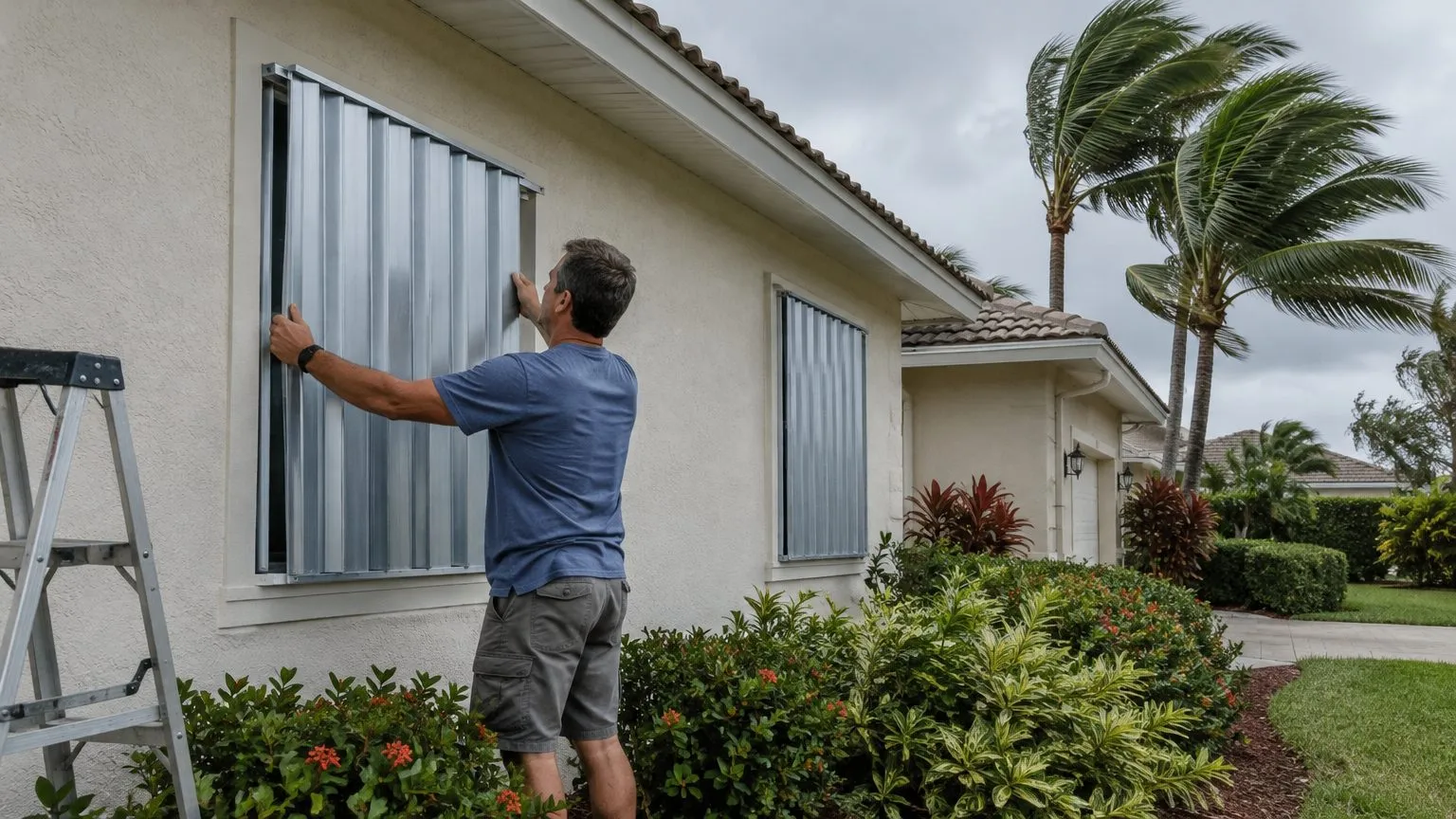
Remove loose furniture, decorations, planters, toys, and yard debris that could strike the outdoor unit. Follow local emergency guidance for shutters, evacuation, and property preparation.
Do not wrap the outdoor unit in a tarp or cover it while it is running. Do not tape panels closed, place plywood on top, or improvise a protective enclosure that can trap moisture or obstruct airflow. If a manufacturer or installer has provided storm-specific instructions for your model, follow those directions.
If local officials or your household plan calls for shutting down equipment before an evacuation or an expected outage, do so only through normal controls and only when it is safe to access them. Avoid electrical panels or equipment in wet conditions.
After the storm: check safely before restarting
Wait until conditions are safe and follow local guidance before returning to the property. From a safe distance, look for:
- Floodwater or standing water around the outdoor unit or indoor equipment
- Fallen branches, visible impact damage, or a shifted cabinet
- Damaged or exposed wiring
- Loose ductwork, insulation, or refrigerant lines
- Debris blocking the outdoor coil or fan area
Do not open electrical panels, remove cabinet covers, or try to dry out flooded equipment. If you see damage or flooding, call for professional inspection before turning the system back on.
If the system appears intact and there has been no flood exposure, restore power according to normal household procedures. A thermostat that does not come back on, a breaker that trips repeatedly, unusual noises, burning smells, or poor cooling are reasons to stop and call for service.
Flood exposure is different from rain
Outdoor HVAC units are designed to experience normal rain and moisture. Floodwater and prolonged standing water are different concerns because they may carry contaminants and affect electrical or mechanical components. The same caution applies to indoor air handlers, electrical connections, and ductwork exposed to water.
When in doubt, ask a qualified technician to inspect the equipment. This is particularly important for low-lying or flood-prone areas of Flagler County.
A short storm-preparation checklist
| Before the storm | After the storm |
|---|---|
| Clear loose yard items and debris from around the unit | Check from a safe distance for water, debris, or visible damage |
| Keep vegetation trimmed back | Do not restart equipment that was flooded or visibly damaged |
| Make sure maintenance and drain concerns are addressed | Stop if breakers trip, odors occur, or the system sounds unusual |
| Follow official local emergency guidance | Arrange professional inspection when you are unsure |
The bottom line
The best hurricane preparation for HVAC equipment is calm, practical preparation: clear the area, avoid unsafe homemade protections, plan for outages, and inspect carefully afterward. For Flagler County homeowners, knowing when not to restart the system is as important as knowing what to clear away before the storm.
Still having trouble? Browse HVAC companies serving Flagler County to find local professionals who can help.