
HVAC GuidesFlorida Climate
Best HVAC Practices for Florida's Climate
Quick answer
Florida HVAC care is mostly about helping the system handle long cooling seasons, high humidity, heavy rain, and occasional severe weather. Check filters regularly, keep airflow and condensate drainage in good shape, clear the outdoor unit, use the thermostat thoughtfully, and schedule routine professional maintenance. In Flagler County, coastal exposure and hurricane season deserve extra attention, while winter cold snaps are a reminder to test the heating side of the system before you need it.
The goal is not to constantly work on your equipment. It is to build a few simple habits that prevent small, avoidable issues from becoming comfort problems during the times your system works hardest.
Why Florida HVAC care is different
In Flagler County, an HVAC system has a long cooling workload. It also has to manage moisture, not simply lower the temperature. A house can be cool enough on the thermostat but still feel clammy if indoor humidity is not under control.
The local environment adds a few other considerations. Homes in the Hammock and along the Matanzas River may see more salt-air exposure around outdoor equipment. Homes farther inland, including around Bunnell, can feel the occasional cold morning more sharply. Across the county, tropical storms, heavy rain, power interruptions, and windblown debris make outdoor-unit condition worth watching year-round.
Keep the filter and airflow in good shape
Check the filter every month
Your filter protects the indoor equipment and helps air move through the system. Check it monthly during periods of regular use, and replace or clean it when it is dirty according to the equipment and filter manufacturer’s guidance. Long cooling seasons mean many Flagler County filters need attention more often than homeowners expect.
Use the correct size, and do not automatically choose the highest available filter rating. A filter that is too restrictive for the equipment can reduce airflow. If you want a higher-efficiency filter for allergies or indoor-air concerns, ask a professional what your particular system can accommodate.
Keep vents and return grilles open
Supply vents deliver cooled or heated air, while return grilles bring air back to the system. Furniture, rugs, drapes, and storage items can block that circulation. Make a quick walk-through part of your regular housekeeping routine, particularly in rooms that tend to feel warmer or more humid.
Closing many vents to force air into other rooms is usually not a lasting solution. If comfort remains uneven after the simple checks, the cause may be ductwork, insulation, airflow balance, or equipment performance.
Take humidity seriously
High indoor humidity makes a home feel warmer, can contribute to musty odors, and may lead people to set the thermostat unnecessarily low. Before lowering the temperature, make sure exterior doors and windows are closed, the filter is clean, and bathroom exhaust fans are not left running longer than needed.
If the home is consistently clammy, has recurring musty smells, or shows moisture near the air handler, arrange an evaluation. An HVAC professional can check the condensate system, airflow, ductwork, and equipment operation. A larger air conditioner is not automatically the answer. Proper sizing and runtime matter for both comfort and moisture control.
Protect condensate drainage
When your AC removes humidity from the air, it creates condensate water that must drain away properly. Because Florida systems do so much moisture removal, the drain line and related components deserve regular professional attention.
As a homeowner, watch for water around the indoor unit, a full or tripped float switch, stains near the air handler, or a sudden shutdown during cooling. Do not bypass a safety switch or take apart the drain system if you are unsure what you are doing. Prompt service can help prevent a small drainage problem from becoming a water-damage problem.
Keep the outdoor unit clear and visible
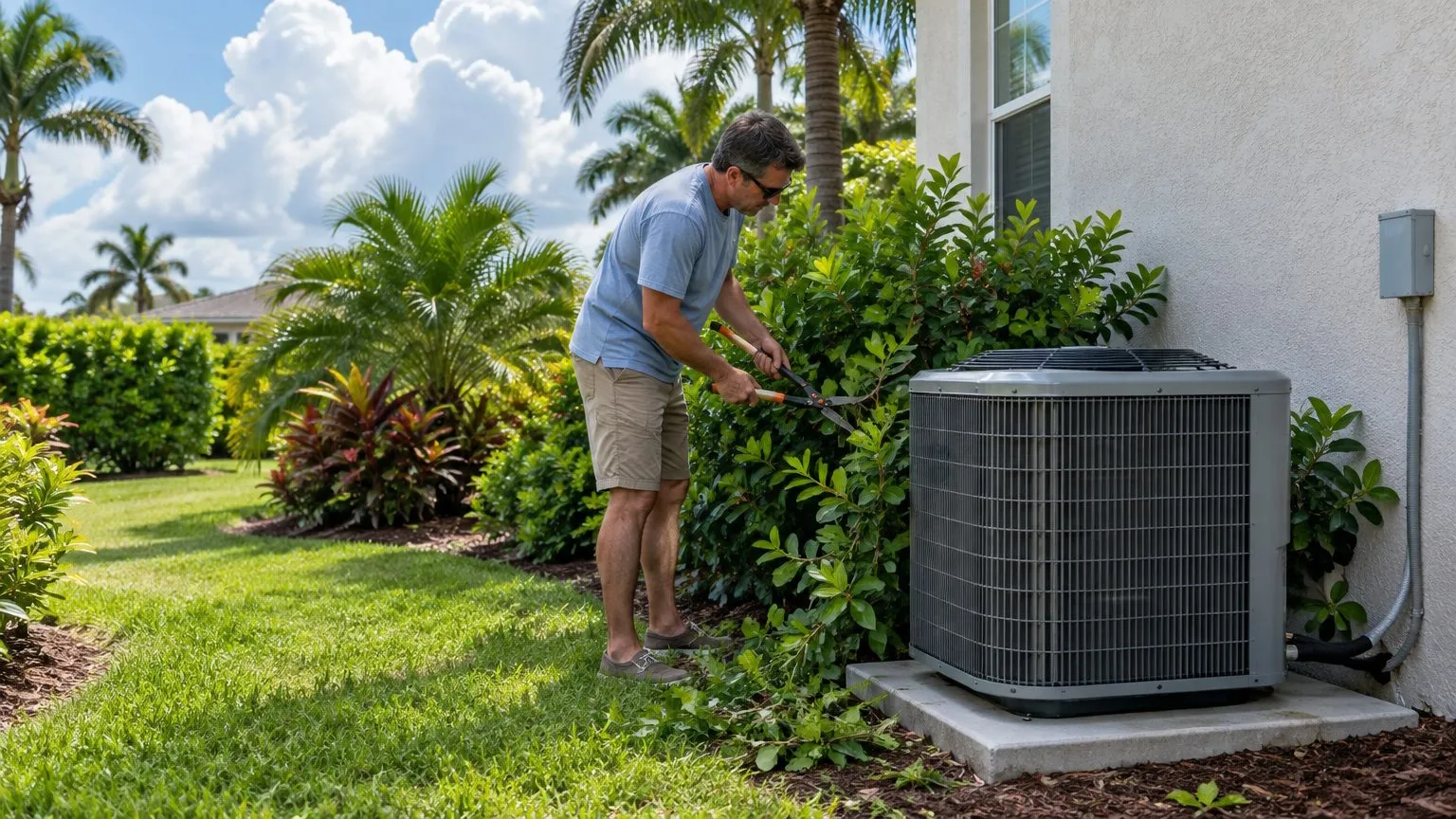
The outdoor portion of your air conditioner or heat pump needs open airflow. Periodically remove loose leaves, pine straw, branches, and windblown debris from the area around it. Trim vegetation back enough to avoid crowding the cabinet, and do not lean tools, patio items, or supplies against the unit.
Look without opening panels or touching electrical components. Visible damage, loose insulation on refrigerant lines, standing water, severe rust, or unusual noise during operation are good reasons to call for service.
Coastal equipment needs extra observation
Salt air can speed up corrosion on outdoor equipment, especially closer to the coast. That does not mean every coastal system will fail early, but it does make regular visual inspections and professional maintenance more valuable. Mention the home’s location when scheduling service so the technician can assess the outdoor unit with that exposure in mind.
Use the thermostat and fans intentionally
Set the thermostat at the highest temperature that keeps your household comfortable. The smaller the gap between indoor and outdoor temperatures, the less work the system generally has to do. Avoid dropping the setting far below your normal comfort level in hopes of cooling the house faster. The system does not cool faster because the number is lower. It simply runs longer.
Ceiling fans can make occupied rooms feel cooler through air movement. In cooling season, they should normally run counterclockwise. Turn them off when a room is empty, since a fan improves comfort for people but does not cool the room itself.
If you use a programmable or smart thermostat, favor modest, realistic schedules. Letting a house get hot and humid all day, then asking the system for a dramatic catch-up, can be less comfortable and may not deliver the savings you expected.
Reduce heat before it enters the home
Your HVAC system performs best when it does not have to overcome unnecessary heat gain. Use blinds, curtains, or other appropriate shading on sunny windows, especially during the afternoon. Check weatherstripping around exterior doors, replace worn door sweeps, and seal obvious gaps around accessible windows and trim.
Attic insulation, duct leakage, and larger air-sealing issues can have a major effect on comfort and cooling costs. These are worth investigating when some rooms are always hot, bills seem out of proportion, or the system runs for very long periods. A proper evaluation can identify whether the problem is the equipment, the ducts, or the home itself.
Schedule professional maintenance before peak demand
Routine maintenance gives a qualified technician a chance to inspect the parts homeowners should not service, including coils, electrical connections, refrigerant performance, drainage, controls, and airflow. Spring is a sensible time to prepare for the heavier cooling season. If you have a heat pump, a fall visit can also help confirm that the heating side is ready for the cooler periods ahead.
Maintenance does not eliminate every repair, but it can uncover conditions that reduce efficiency, hurt humidity control, or shorten equipment life. Tell the technician about any repeat concerns, such as high bills, uneven rooms, drainage issues, short cycling, or a system that seems to run constantly.
Prepare for hurricane season safely
Before a tropical storm or hurricane, clear loose yard items and debris away from the outdoor unit. Review your household power-outage plan and know where the thermostat and electrical panel are located. Follow local emergency guidance and your equipment manufacturer’s instructions.
Do not wrap or cover equipment while it is operating, and do not improvise straps, boards, or protective enclosures that could damage the unit or obstruct airflow. After a storm, check from a safe distance for flood exposure, fallen branches, damaged wiring, or displaced equipment before restarting it. If the equipment was flooded, visibly damaged, or exposed to standing water, have it inspected before use.
For a step-by-step seasonal plan, see Preparing Your HVAC for Hurricane Season.
Do not forget the occasional cold snap
Heating may be easy to overlook after months of cooling. Before Flagler County’s first genuinely cold night, set the thermostat to Heat and test the system while you are home. Check that warm air reaches the rooms and that the outdoor unit operates if you have a heat pump.
Light frost on a heat-pump outdoor coil can be normal in cool, damp weather, and a defrost cycle should clear it. Heavy or persistent ice, weak heat, frequent auxiliary heat, or unusual smells warrant professional attention.
Read Preparing Your HVAC for Flagler County’s First Cold Snap for a focused checklist.
A simple Florida HVAC calendar
| Season | Focus |
|---|---|
| Spring | Service the cooling system, check filters, inspect drainage, and prepare for heavier AC use. |
| Summer | Check filters monthly, manage humidity, clear the outdoor unit, and watch for cooling or drainage changes. |
| Hurricane season | Clear loose debris, follow local weather guidance, and inspect equipment safely after storms or outages. |
| Fall and winter | Test heat before a cold snap, understand heat-pump defrost behavior, and keep the outdoor unit clear. |
When to call an HVAC professional
Arrange service if you notice weak airflow, recurring water near the air handler, persistent humidity, ice on the equipment, rooms that will not stay comfortable, loud or new noises, frequent breaker trips, or an outdoor unit that looks damaged or severely corroded. You should also call after flood exposure or visible storm damage.
The bottom line
Good Florida HVAC care comes down to consistent basics: clean airflow, controlled humidity, a clear outdoor unit, regular maintenance, and seasonal awareness. Those habits give your system a better chance of handling Flagler County’s long warm season, coastal conditions, storms, and occasional cold weather without unnecessary strain.
Need professional help? Browse HVAC companies serving Flagler County.